
When Communication Meant Something: A Love Letter to Phone Booths and the BlackBerry Keyboard
Why Tactile Tech Meant More—and What We've Lost Since Letting It Go

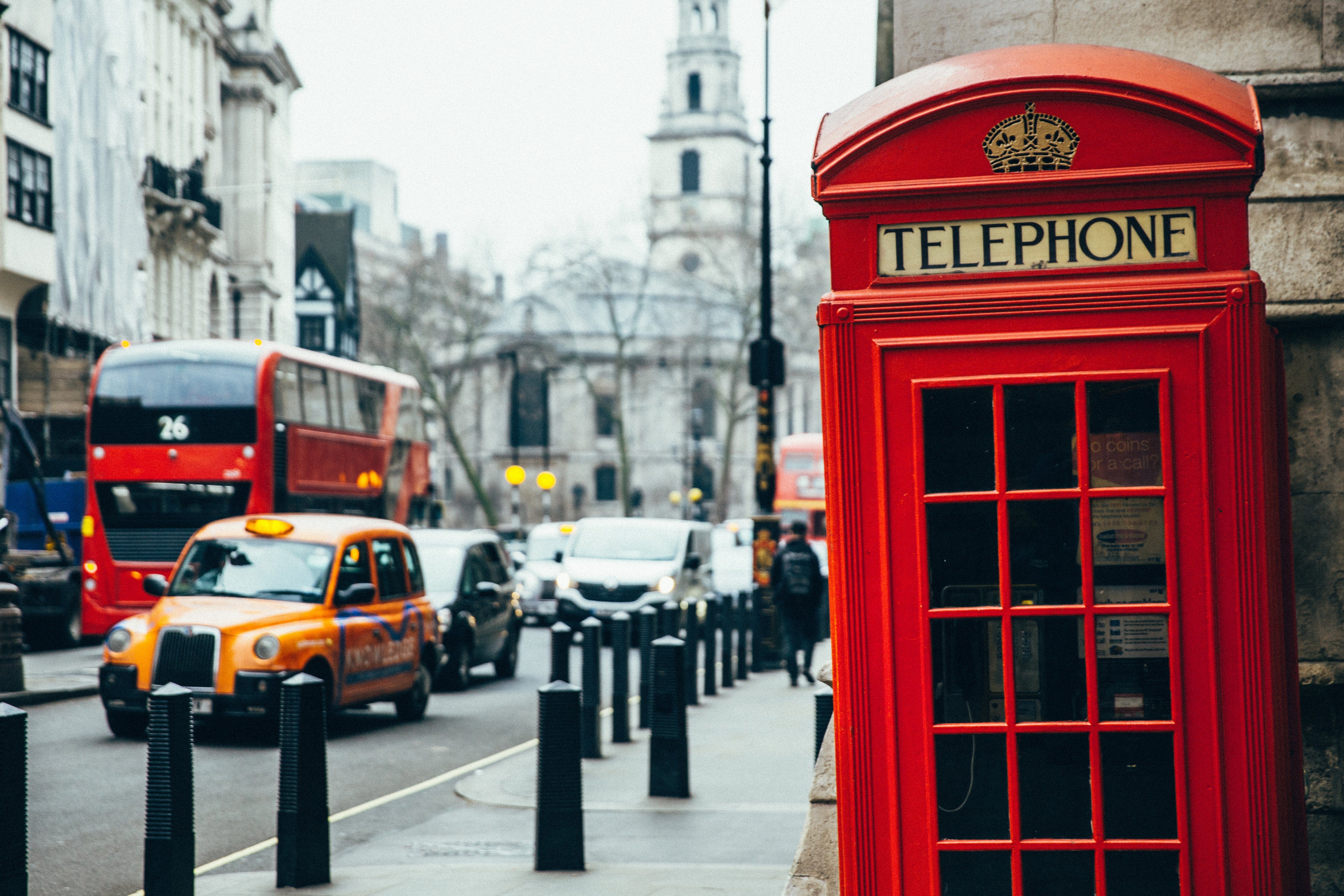
There was a time—not so long ago—when making a phone call meant stepping into something. A space. A moment. A commitment. The phone booth wasn’t just a public utility; it was a ritual. A glass-and-metal shrine on street corners, where coins clinked, hinges squealed, and voices mattered. You didn’t make idle calls in a phone booth. You made calls that counted—because you were paying for them, minute by minute. There was a gravity to it. You stepped in, shut the door, shut the world out, and the conversation began. Real conversation. No emojis. No memes. Just the raw sound of a human voice transmitted through copper.
And for a long time, that was enough.
But then came the shift. The private became portable. And the dawn of the mobile age didn’t just change how we communicated—it changed what communication meant. Amid that revolution, something sacred emerged. Not just a phone. Not just a handheld. But a device that gave you the power of a full keyboard in the palm of your hand.
The BlackBerry.
More specifically: The BlackBerry QWERTY keyboard.
A marvel of tactile engineering. A tool so perfect, so intuitive, so precise, that I will die on this hill:
The BlackBerry keyboard is the greatest invention since the goddamn wheel.
Hyperbole? Not even close.

Try to understand what it meant, in that era, to hold a BlackBerry. You weren’t just holding a phone—you were holding command. Thumb-powered. Click-driven. No auto-correct hell. No fat-finger errors. Just pure, unfiltered intent mapped onto perfectly domed keys that responded to your touch. That keyboard didn’t guess what you wanted to say—it knew. It was a direct neural link between thought and word, mind and message.
And don’t come at me with, “Well, touchscreen keyboards are faster.” They’re not. They’re noisier. Busier. Flashier. But they don’t feel like writing. They don’t click. They don’t snap. They don’t give you the thrill of sculpting a sentence with your thumbs and hearing that satisfying click-click-click, each press a deliberate choice in a world that increasingly demands speed over clarity.
The BlackBerry keyboard demanded your attention. And in return, it gave you control.
And let’s not forget what came with that keyboard—the whole philosophy behind it. You weren’t swiping. You weren’t doom-scrolling. You were typing. Writing full paragraphs. Drafting emails that meant something. If you’ve never composed a heartfelt message on a BlackBerry Bold, thumbs gliding across the fretted keys like a jazz solo, then you’ve never truly experienced mobile communication. Everything else is a compromise. That keyboard? That was the ideal.
It was the perfect fusion of form and function. Like the wheel—it did its job so well, no one could improve it. And like the wheel, it changed everything.
So when people talk about nostalgia for tech—cassette players, rotary phones, even the old Nokia bricks—I nod. I get it. But my nostalgia runs deeper. It’s wired into muscle memory. My thumbs still remember the shape of those keys, the way you could fly through a message without even looking. I could blind-type faster on a BlackBerry than I ever could on a laptop keyboard. That wasn’t tech. That was craftsmanship.
Now, zooming out: the beauty of this whole evolution, from phone booth to BlackBerry, wasn’t just in the devices themselves—it was in the way they made us feel. In the phone booth, you felt present. Vulnerable, yes—but committed. That little glass cube was a sacred space. You entered with intent. You left having connected.
The BlackBerry took that sacred intent and made it mobile. It said: “You don’t have to be in a booth. You are the booth now. The communicator. The signal tower. The nerve center.” You could be standing in line at a bank, in a cab, on a train platform—and still conduct business like a boss. And not fake business. Not Slack messages and group emojis. Real business. Pitches. Proposals. Agreements. Disagreements. Decisions.
The keyboard enabled that. It empowered that. Hell, I’d go so far as to say it civilized the early mobile age. You knew when someone sent you an email from a BlackBerry that they meant it. It wasn’t dashed off in a panic. It wasn’t full of typos or weird formatting. It was polished. Considered. And it came from a place of intent.
So what happened? The same thing that always happens.
Touchscreens took over. BlackBerry fumbled the shift to app ecosystems. The market wanted flashy. The world wanted smooth glass slabs, not precision tools. People chose flexibility over fidelity. And the greatest mobile input device in history was quietly pushed to the margins. A few loyalists clung to their Bold 9900s. Some newer models tried to bring it back. But the tide had turned.
The booths disappeared from our streets. The BlackBerrys disappeared from our hands.
But they never disappeared from our hearts.
Because once you’ve felt that connection—once you’ve clicked out a 300-word email on a phone with mechanical perfection—you don’t forget. Once you’ve stepped into a phone booth in the middle of a rainstorm, heart pounding, hoping someone on the other end would pick up—you don’t forget.
The tech moved on. But the experience lingers.
So what do we do with that?
We remember. And we demand better. We hold modern tech to a higher standard. Not just “Can it do this?” but “How does it let me do this?” We ask: Where is the intent? Where is the craft? Where is the feeling that this device was made for us, not just for everyone?
And maybe, just maybe, we don’t write off the past as obsolete. We look at the wheel. We look at the BlackBerry keyboard. We look at the phone booth. And we say:
“They nailed it. Not everything new is better. Some things were already right.”
That’s the truth.
And if anyone ever gives me the chance to build my perfect communicator? You better believe it’s going to have a goddamn BlackBerry keyboard. Because that wasn’t just an input method. It was a way of thinking. A way of connecting. A way of being.
And I won’t apologize for saying it changed my life.
Because it did.